
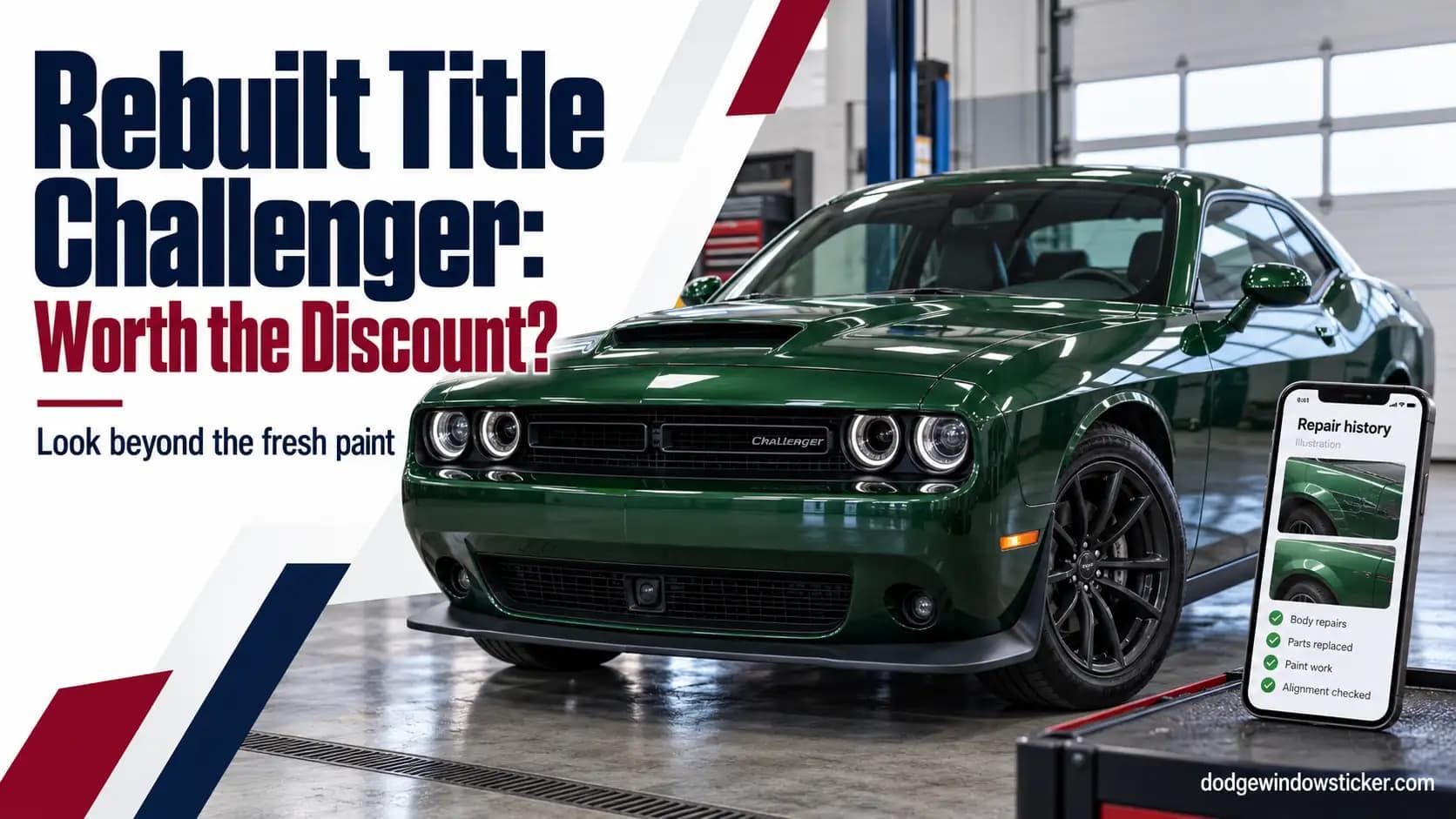
A Dodge Challenger with a rebuilt title can be worth considering, but only when the repair history, inspection results, and price support the purchase. If the seller cannot show what happened to the car, you have little basis for deciding whether the discount is enough.
The attraction is easy to understand. A Challenger that seemed outside your budget suddenly looks affordable. The photos are good, the interior looks tidy, and the seller says it drives perfectly.
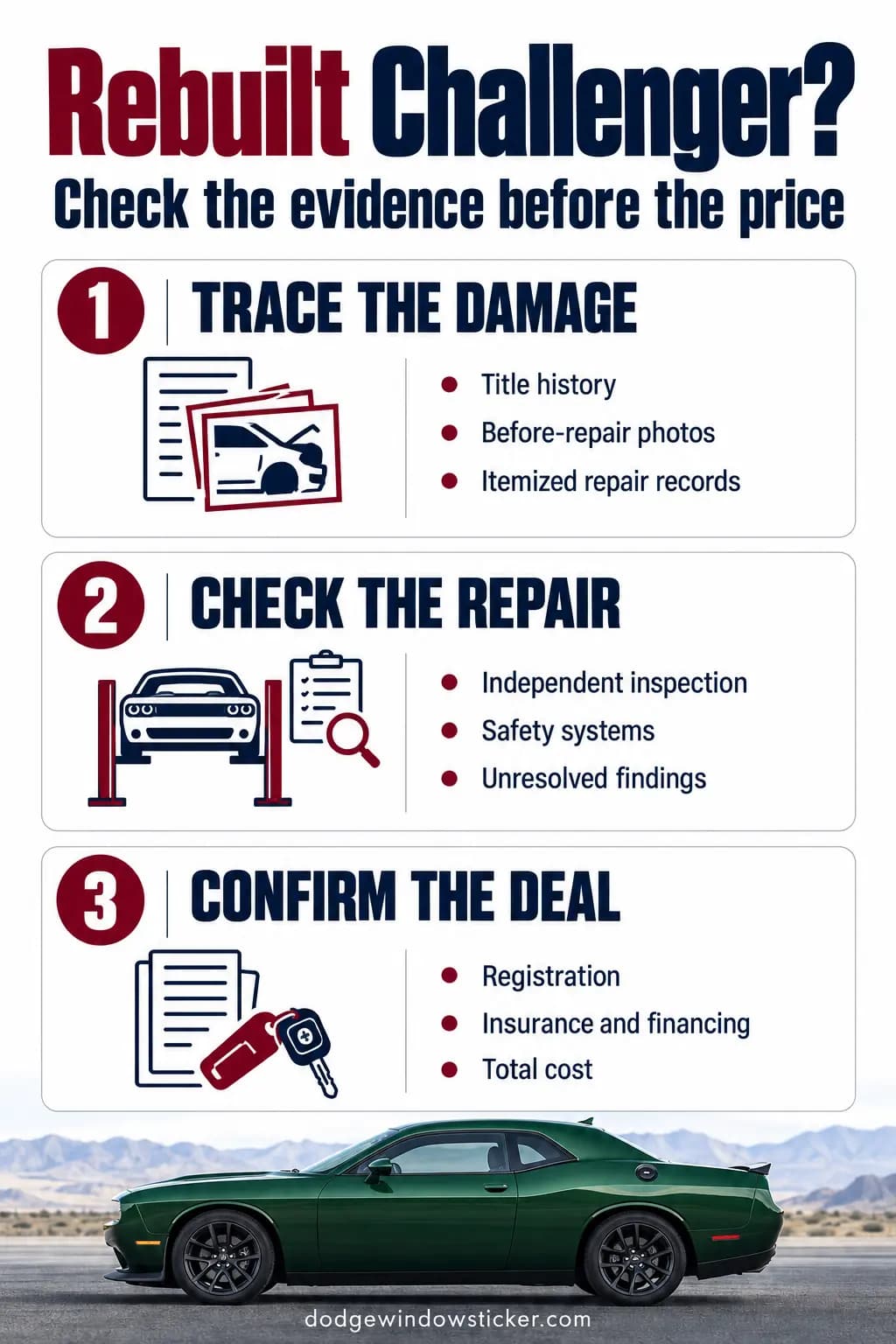
Before arranging a viewing, find out why it became a salvage vehicle and who repaired it. Those answers matter more than fresh paint.
Key Takeaways
- Ask for photos from before the repairs and itemized invoices.
- Compare the advertised equipment with the car’s original specification.
- Get insurance confirmation and an independent inspection before committing.
What a Rebuilt Title Actually Tells You?
A rebuilt title generally means a vehicle previously had a salvage title and later completed the applicable process for a rebuilt designation. States use different terminology and requirements. In Texas, the title brand is “Rebuilt Salvage.”
That designation tells you something about the vehicle’s history. It does not tell you how neatly every repair was finished or how reliable the car will be.
It also does not mean the engine was rebuilt. A seller might use “rebuilt” casually, so check whether they mean the title, the engine, or both. Ask for a clear photo of the current title before traveling to see the Challenger. Look at the exact wording and issuing state, then compare the VIN with the listing.
| What the Advertisement Says? | What to Ask? |
|---|---|
| “Rebuilt and ready to go” | Can I see the current title and repair records? |
| “Salvage, fully repaired” | Has the rebuilt-title process been completed? |
| “Passed inspection” | Which inspection did it pass? |
| “Minor damage only” | Are there photos showing the car before repairs? |
← Scroll horizontally to see more →
A repaired car still carrying salvage paperwork may require additional steps before registration. Check with the motor vehicle authority where you live, especially if the seller is in another state.
Start With the Damage Story
Ask the seller to explain what happened in plain language. Which part of the Challenger was damaged? When did it happen? Did they buy it before or after the repairs? You do not need a technical explanation at this stage. You need an account that can be checked.
A Dodge VIN check can help you review available title, damage, mileage, and ownership information. Use it alongside the seller’s documents rather than treating either source as the complete story.
Put the events in order:
- The damage or loss occurred.
- The car changed hands, if applicable.
- Repair work was completed.
- Rebuilt documentation was issued.
If dates conflict, ask why. An explanation may be straightforward, but it should fit the records.
Suppose the seller describes a recent repair, while the paperwork shows a much earlier salvage event. That does not establish dishonesty by itself. It does leave an unanswered question: are you discussing the same incident? Resolve that before moving on to price.
Which Repair Records Are Worth Asking For?
Before-repair photographs are a useful starting point. They let you and the inspector see what was visible before damaged parts were replaced. Ask for more than one close-up. A photograph of a cracked bumper cannot show the condition of the rest of the car.
The strongest repair file combines photographs with documents explaining the work.
| Record | What to Look For? |
|---|---|
| Before-repair photos | Several views showing the affected areas |
| Repair estimate | Work identified before or during the repair |
| Itemized invoices | Specific work, dates, and the repair business |
| Parts receipts | Descriptions of replacement parts |
| Inspection reports | What was checked and any unresolved findings |
← Scroll horizontally to see more →
Check that VINs, where included, match the Challenger. The dates should also make sense together. Receipts show what was billed; they do not prove the quality of the work. An independent inspector still needs to examine the car.
A seller who bought the Challenger after it was repaired may have only part of the file. Ask whether earlier records can be obtained. If they cannot, decide whether the remaining uncertainty is acceptable before spending money on further checks.
“It Passed Inspection” Needs a Follow-Up Question
Ask: “What did that inspection cover?” The answer matters because a title-related examination is not necessarily a full assessment of repair quality.
New York DMV, for example, explains that its salvage examination is not a safety, emissions, or insurance inspection. Its purpose includes checking for stolen vehicles and parts. Separate requirements apply. Get a copy of the report if one is available. Check the vehicle identification, date, inspecting organization, and scope.
A seller may sincerely believe that passing one examination settles every concern. You still need to know whether anyone assessed the repaired areas, current mechanical condition, and relevant safety systems.
Book your own pre-purchase inspection with that information in hand. Tell the shop about the rebuilt title when making the appointment, so it can explain what it can examine and whether another specialist is needed.
Use the Window Sticker to Check What You Are Buying
Repair quality is only part of the decision. You also want to know whether the Challenger matches its description. A replacement hood, different seats, or added badges can change the car’s appearance. They should not be your only evidence of its original trim or factory packages.
A Dodge window sticker can provide available original equipment details to compare with the advertisement and the repaired car.
| Advertised Detail | What to Compare? |
|---|---|
| Trim and engine | The original specification recorded for that VIN |
| Factory package | Whether the package appears in the available record |
| Paint and interior colors | Original details versus the car’s current appearance |
| Optional equipment | Recorded features versus what is fitted now |
← Scroll horizontally to see more →
For example, if the seller charges extra for a claimed factory package, ask where that claim comes from. A badge or general model brochure is not enough to establish the equipment on that particular Challenger. Use the Dodge window sticker lookup to review the sample and available coverage before ordering.
The sticker helps establish the starting point. It cannot tell you whether replacement parts were installed properly or whether a feature still works. Compare the record with the actual car, then have unexplained differences checked.
Give the Inspector the Full Picture
Choose a shop that is comfortable assessing previously damaged vehicles. Some mechanical shops can handle much of the work; others will recommend a collision-repair specialist for certain areas.
Send the repair file ahead of the appointment. If the damage affected the front of the Challenger, for example, the inspector should know that before examining its steering, suspension, and repaired body areas. Ask for written findings that separate immediate concerns from ordinary maintenance.
| Area | Useful Question For The Inspector |
|---|---|
| Repaired body and structure | Does anything need closer investigation or measurement? |
| Airbags and seat belts | Can you assess the current systems and supporting repair records? |
| Steering, brakes, and suspension | Are there problems that could relate to the previous damage? |
| Electrical equipment | Are there faults or questionable repairs? |
| Water intrusion | Is there evidence of leaks or damage requiring further checks? |
| Routine maintenance | What work should I budget for after purchase? |
← Scroll horizontally to see more →
Also ask what the inspection cannot establish. Some checks require equipment, access, or expertise that the shop does not provide. We recommend an independent inspection alongside the vehicle history information. These records are meant to be part of the buying process.
What If the Seller Says It Was Only Cosmetic?
“Only cosmetic” sounds reassuring, but ask for the evidence behind it. A useful answer identifies the damaged parts, shows photographs, and connects them to the repair invoices. “You can see it looks fine now” does not answer the question.
Keep the viewing focused. You can judge whether you like the paint finish or interior. Leave questions about structural repairs and restored safety systems to someone qualified to assess them.
If flood exposure, fire damage, or deployed airbags appear in the history, tell the inspector explicitly. Do not assume a standard appointment covers every concern associated with those events. You also do not have to prove that a repair is defective before declining the car. Sometimes there simply is not enough information to make the purchase comfortable.
A seller who refuses an independent inspection removes one of your main ways to evaluate the deal. That is a reasonable point to stop.
Check Insurance and Financing Before Paying a Deposit
Call an insurer with the VIN and disclose the rebuilt title. Ask for a quote for the coverage you intend to buy. “Can it be insured?” is too broad. You need to know whether this Challenger qualifies, what coverage is offered, and what conditions apply.
Ask about:
- Liability coverage.
- Collision and comprehensive availability.
- Required photographs or inspections.
- Premiums and deductibles.
- How the vehicle’s value would be assessed after a covered loss.
Be aware that collision and comprehensive availability for rebuilt-title vehicles varies by insurer. One company’s answer does not necessarily apply to another.
If you plan to finance the car, give the lender the same title information. A general prequalification does not establish that the lender will accept this particular vehicle. Get these answers before paying a deposit. If a deposit is required while checks are pending, read the written conditions and understand when it is refundable.
The goal is to avoid discovering an ownership problem after you have already committed money.
Calculate the Savings After Known Costs
The advertised discount is only the beginning of the comparison. Find Challengers with a similar year, original specification, mileage, and condition. Then add the costs already identified for each car.
Here is a hypothetical example, not a market valuation or a prediction of repair costs:
| Expense | Rebuilt Challenger | Comparable Clean-Title Challenger |
|---|---|---|
| Purchase price | $18,000 | $23,000 |
| Inspection and assessments | $500 | $250 |
| Known immediate work | $2,500 | $750 |
| Total shown | $21,000 | $24,000 |
← Scroll horizontally to see more →
The listing prices suggest a $5,000 saving. After these expenses, the difference is $3,000. You would still need to include applicable taxes, fees, transport, and insurance differences. Keep some money available for unexpected work instead of spending the entire budget on the purchase.
The clean-title Challenger needs its own inspection and history review. An unbranded title does not prove that a used car has no damage or maintenance needs.
Most importantly, keep unknown costs separate from quoted repairs. You can budget for a documented repair estimate. You cannot price an unresolved problem confidently just because the seller offers another discount.
Consider How Long You Plan to Keep It
If you expect to sell the Challenger soon, think about the questions the next buyer will ask. They will likely want the same repair evidence you need now. Keep copies of the photographs, invoices, inspection findings, and subsequent maintenance records. An organized file makes the history easier to explain. It does not remove the earlier title event.
If a future trade-in is part of your plan, ask potential buyers whether they would consider the vehicle. Do not build your budget around an assumed clean-title resale price.
For longer ownership, focus on whether the car fits your needs and leaves room in your budget for repairs. A low purchase price is less useful if you cannot afford the work identified during inspection. The decision should still make sense if selling takes longer than you hoped.
When Is a Rebuilt Challenger Worth Considering?
By this point, you should be deciding from documents, inspection findings, and actual quotes.
| The purchase deserves consideration when… | Keep looking when… |
|---|---|
| The title and damage history are consistent | Important details conflict |
| Repair records support the seller’s account | The explanation keeps changing |
| Inspection findings are acceptable | Major repair or safety questions remain |
| Insurance and any financing are confirmed | Approval is still being assumed |
| The total cost leaves a useful saving and reserve | Known expenses consume the discount |
← Scroll horizontally to see more →
High mileage creates a separate set of questions. If the car has passed that milestone, you should still know what to check before buying a Dodge Challenger with 100,000+ miles for maintenance checks beyond its rebuilt history.
Pro tip: Keep three short lists: “confirmed,” “needs evidence,” and “needs a quote.” This makes it easier to see what remains unresolved when the seller asks for a decision.
Make the Decision Before the Price Talks You Into It
A rebuilt-title Challenger is worth considering when you understand the damage, have confidence in the repair assessment, and can afford the car on the terms actually available to you.
If the purchase still depends on accepting an unsupported explanation, leave the discount on the table. Another Challenger is easier to evaluate than a repair history you cannot establish.