
Whether repairing a scratched bumper, restoring a classic Dodge, or ordering touch-up paint, finding the correct factory paint code is essential. Even colors that appear identical can have different paint formulas, making it difficult to achieve a seamless repair without the original paint code.
Fortunately, identifying the factory paint color is easier than ever. One of the most reliable methods is to use the vehicle identification number (VIN). A Dodge VIN lookup can access factory production records and reveal important vehicle information, including the original paint color assigned when the vehicle left the assembly line.
In this guide, learn how to find a Dodge paint code by VIN, where else to locate the paint code, why it matters, and how to ensure the perfect color match for repairs or restoration projects.
Can a VIN Tell You Your Dodge Paint Code?
Yes, but not directly.
A Dodge VIN does not contain the paint code within its 17 characters. Instead, the VIN acts as a unique identifier that allows access to factory records associated with the vehicle. One of the easiest ways to retrieve this information is by obtaining the original Dodge Window Sticker using the VIN.
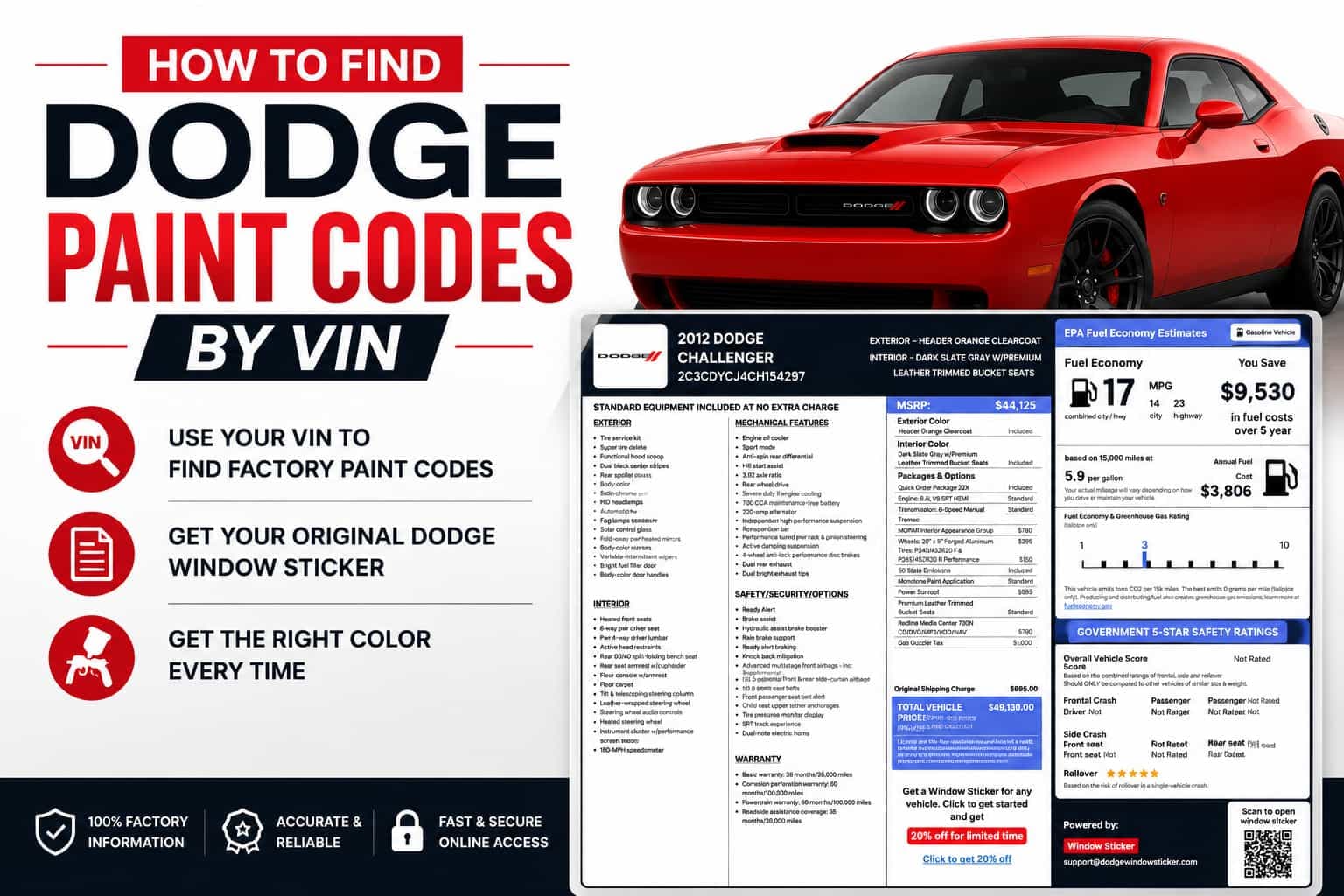
The Window Sticker provides a snapshot of the vehicle as it left the factory. Along with the exterior paint color, it may also include the model, trim, engine, transmission, optional equipment, standard features, MSRP, fuel economy ratings, and safety information.
If the paint label has faded or is missing, retrieving the original Window Sticker is often one of the most reliable ways to confirm the factory paint specification.
What Information Can a Dodge Window Sticker Reveal?
Beyond the factory paint color, the original Window Sticker provides a detailed breakdown of the vehicle's original specifications.
Depending on the model year, it may include:
- Exterior paint color
- Interior trim color
- Model and trim
- Engine specifications
- Transmission
- Factory-installed options
- Standard equipment
- Optional packages
- Original MSRP
- EPA fuel economy ratings
- Safety ratings
This information is especially valuable when restoring a vehicle, purchasing a used Dodge, or verifying that it still matches its original factory configuration.
How to Find a Dodge Paint Code by VIN
Using the VIN to retrieve the original Dodge Window Sticker is one of the easiest ways to identify the factory paint color. Instead of relying on faded labels or visual comparisons, the Window Sticker provides factory-issued information recorded when the vehicle was manufactured.
Follow these steps to locate the original paint information.
Step 1: Locate the VIN
Before retrieving the Window Sticker, locate the vehicle's 17-character VIN. The VIN can usually be found: 1. On the driver's side dashboard 2. Inside the driver's door jamb 3. On the registration documents 4. On the insurance card 5. On the vehicle title
Step 2: Enter the VIN
Visit the Dodge window sticker site and enter the Dodge VIN you want to check. Then, enter the form above. Once it's good, click the button to submit the form.
Step 3: Get the Window Sticker
Examine the preview page and proceed to payment to get the full Dodge window sticker to see the paint colors of the interior and exterior.
Where Else Can You Find a Dodge Paint Code?
While retrieving the original Dodge Window Sticker is one of the most reliable ways to identify the factory paint color, it isn't the only option. Dodge vehicles may also have paint information in several physical locations or factory documents.
However, these methods can vary depending on the model year, and some labels may become faded or damaged over time. Knowing where to look can help confirm the original paint color before ordering touch-up paint or scheduling repairs.
Driver's Door Jamb Label
One of the first places to check is the driver's side door jamb. Many Dodge models have a certification label or information sticker that contains important manufacturing details, including the factory paint code.
Original Window Sticker
Depending on the model year, the Window Sticker may list the exterior paint color alongside other factory-installed specifications, making it an excellent reference for owners who want to restore or maintain their vehicle using original manufacturer information.
Factory Build Sheet
Compared to the Window Sticker, the Build Sheet contains more technical manufacturing information. It can be especially useful during complete restorations or when verifying factory-installed options.
Owner's Documents and Service Records
Documents such as the owner's manual packet, dealership purchase paperwork, or maintenance records occasionally include details about the original exterior color or factory options. While these records may not always list the paint code itself, they can provide additional information that helps confirm the vehicle's factory configuration.
Understanding Dodge Paint Codes
Finding the paint code is only the first step. Understanding what the code represents makes it easier to purchase the correct paint and avoid costly mistakes during repairs.
Unlike the marketing name displayed in brochures, a factory paint code identifies the exact paint formula used during production.
How Dodge Paint Codes Are Formatted
Dodge paint codes are typically made up of a short combination of letters and numbers.
Some common examples include:
| Paint Code | Color Name |
|---|---|
| PX8 | Black Clear Coat |
| PW7 | Bright White Clear Coat |
| PR3 | TorRed Clear Coat |
| PXR | Brilliant Black Crystal Pearl Coat |
← Scroll horizontally to see more →
Paint Code vs. Paint Color Name
It's easy to confuse a paint code with a paint color name, but they serve different purposes.
The paint color name is the consumer-friendly name used in brochures and marketing materials, while the paint code is the manufacturer's internal identifier for the exact color formula.
For example:
- Paint Code: PX8
- Color Name: Black Clear Coat
Although the color name is easier to recognize, the paint code is what suppliers use to mix the correct paint for repairs. When ordering touch-up paint or scheduling collision repairs, providing the paint code helps ensure a more accurate match.
Why the Correct Dodge Paint Code Matters
Using the correct factory paint isn't just about appearance. It also helps preserve the vehicle's value, improves repair quality, and ensures replacement panels blend seamlessly with the rest of the body.
Whether repairing a small scratch or restoring an entire vehicle, the original paint specification provides the best starting point.
Accurate Color Matching
Many Dodge colors include metallic flakes, pearl finishes, or multi-stage coatings that create different visual effects depending on the lighting conditions. Using the factory paint information from the window sticker helps improve the chances of achieving a closer color match.
Preserve the Vehicle's Value
Maintaining the original factory color can help protect a vehicle's long-term value. For collectors and enthusiasts, factory-correct paint is often considered an important part of preserving authenticity. Even for daily drivers, high-quality repairs that closely match the original finish contribute to a cleaner appearance and may improve resale appeal.
Improve Repair Results
Professional body shops rely on accurate factory paint information to produce consistent repair results. Using the original paint specification minimizes the risk of mismatched panels, uneven finishes, or noticeable color differences after repairs.
Common Reasons a Dodge Paint Color Doesn't Match
Even with the correct factory paint information, the repaired area may look slightly different. Several factors can affect how paint appears over time, even when the original factory color is used.
Years of Sun Exposure
Long-term exposure to sunlight can gradually fade automotive paint. As the original finish ages, freshly applied paint may appear brighter until the repaired area naturally blends with the surrounding panels.
UV Damage
Ultraviolet rays slowly break down paint pigments, causing colors to lose vibrancy. Darker shades often become dull, while lighter colors may fade unevenly over time.
Oxidation
Oxidation occurs when paint reacts with oxygen and sunlight, reducing gloss and altering the original appearance. Polishing may improve the finish, but severe oxidation usually requires repainting.
Previous Repairs or Repainting
A Dodge may no longer have its original factory paint. Previous repairs can introduce slight color differences, even if the repaint appears nearly identical.
Final Thoughts
While door labels and build sheets can provide useful information, retrieving the Dodge Window Sticker using the VIN is one of the most reliable ways to confirm the factory exterior paint color and other vehicle specifications. Whether repairing minor scratches, restoring a classic model, or maintaining a newer Dodge, having the original factory information helps ensure more accurate repairs and preserves the vehicle's appearance and value over time.
FAQs on Dodge Paint Codes
Can I find my Dodge paint code using only the VIN?
Yes. While the VIN does not directly contain the paint code, it can be used to retrieve the original Dodge Window Sticker. Depending on the model year, the Window Sticker may list the factory exterior paint color along with other vehicle specifications, making it a reliable source for confirming the original finish.
Where is the paint code located on a Dodge?
The paint code is commonly found on the certification label inside the driver's door jamb. If the label is faded, damaged, or missing, retrieving the original Dodge Window Sticker using the VIN can help verify the factory exterior paint information.
Does the Dodge Window Sticker show the paint color?
Yes, many Dodge Window Stickers include the original exterior paint color as part of the factory vehicle specifications. They also provide additional details such as the engine, transmission, factory-installed options, standard equipment, and original MSRP.
What is the difference between a paint code and a paint color name?
A paint code is the manufacturer's unique identifier for a specific paint formula, while the paint color name is the marketing name used to describe it. Paint suppliers rely on the paint code to mix the correct factory color for repairs.
Can I order touch-up paint using the paint code?
Yes. Once the factory paint code has been identified, it can be used to order OEM or aftermarket touch-up paint, spray cans, or professional refinishing products that closely match the vehicle's original exterior color.
What if my Dodge has been repainted?
If the vehicle has been repainted, the current color may differ from the original factory finish. Retrieving the original Window Sticker helps confirm the paint color assigned when the vehicle left the factory, making it easier to compare with the existing finish.
Is the Window Sticker better than checking the door label?
Both are useful, but the Window Sticker provides more comprehensive factory information. Besides the exterior paint color, it includes original pricing, engine specifications, transmission details, standard equipment, optional packages, and other factory-installed features.
Why is the factory paint code important?
Using the correct factory paint code helps ensure accurate color matching for repairs, restorations, and touch-up work. It also reduces the risk of mismatched panels and helps maintain the vehicle's original appearance and resale value.
.webp&w=1920&q=75)